
Smart Home Installation
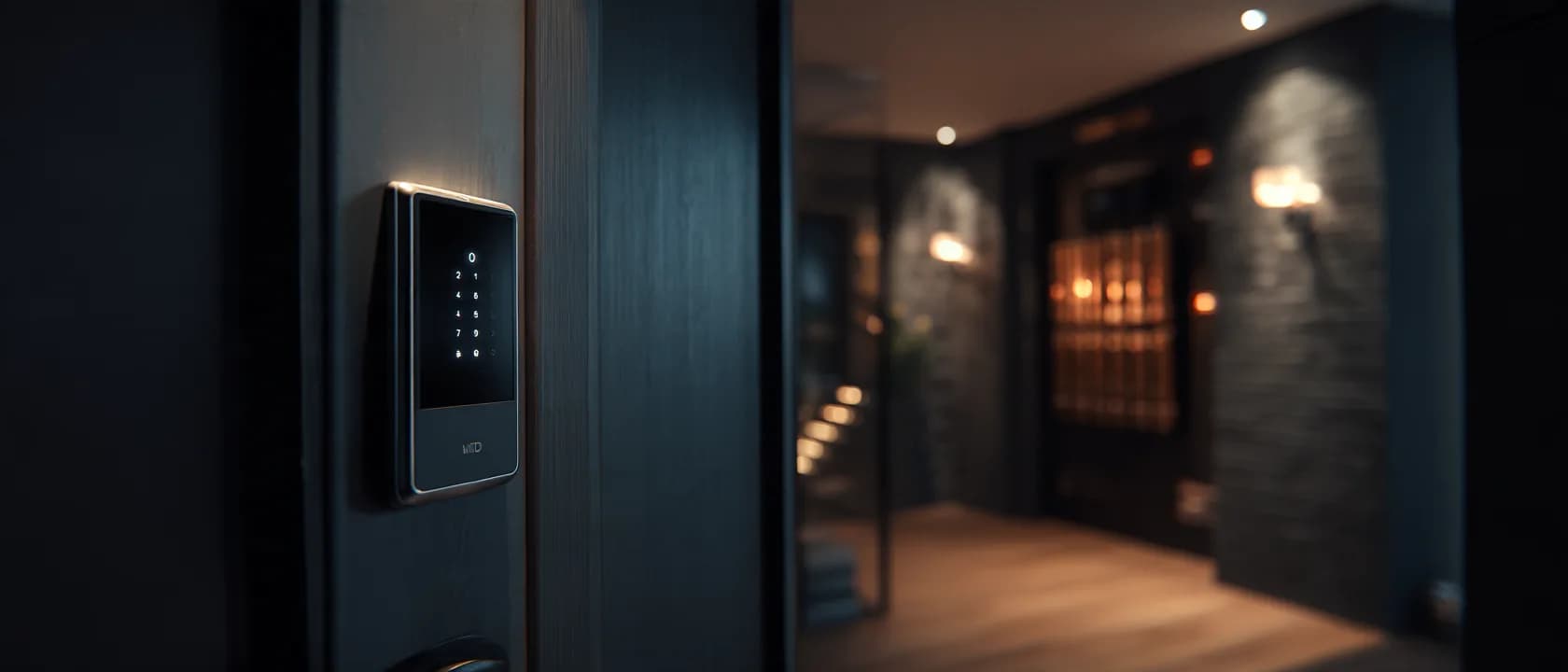
Smart home installation for builders, apartment communities and property managers: pre-wire, Wi-Fi, smart locks, thermostats and sensors, commissioned unit by unit.
LVForce installs and commissions smart home systems in all 50 states: pre-wire, whole-home Wi-Fi, smart locks, video doorbells and intercoms, cameras, sensors, thermostats, lighting and shade control, and the hubs that tie them together. We are an independent installer — the client picks the platform and the devices, and we do the wiring, mounting, pairing and verification. We do not sell subscriptions or hardware on commission for any brand, and we make no claim of certification, authorization or dealer status with any manufacturer; our job is the physical install and a system that actually works when the homeowner or resident opens the app.
Our smart home service is built for builders, multifamily developers and property managers who need the same package installed correctly across dozens or hundreds of units on a schedule, not a single homeowner picking devices off a shelf. That said, we take individual homes too, and the workmanship standard does not change based on who is paying the invoice.
Smart Home Installation, Nationwide
LVForce installs and commissions smart home systems in all 50 states: pre-wire, whole-home Wi-Fi, smart locks, video doorbells and intercoms, cameras, sensors, thermostats, lighting and shade control, and the hubs that tie them together. We are an independent installer — the client picks the platform and the devices, and we do the wiring, mounting, pairing and verification. We do not sell subscriptions or hardware on commission for any brand, and we make no claim of certification, authorization or dealer status with any manufacturer; our job is the physical install and a system that actually works when the homeowner or resident opens the app.
Our smart home service is built for builders, multifamily developers and property managers who need the same package installed correctly across dozens or hundreds of units on a schedule, not a single homeowner picking devices off a shelf. That said, we take individual homes too, and the workmanship standard does not change based on who is paying the invoice.
What We Install
Our smart home scope covers the categories that make up a working system: whole-home network and Wi-Fi, delivered as a wired access point layout or a mesh system depending on the floor plan and construction type; smart locks and video doorbells or intercoms at entry points; interior and exterior cameras; leak sensors under sinks, water heaters and washing machines, plus door and window sensors for entry monitoring; smart thermostats; lighting and shade control, wired or retrofit depending on the project; hubs and controllers that bring the platform's devices onto one pane of glass; and the structured low-voltage pre-wire — Cat6, coax and speaker runs to a central panel — that everything above depends on.
We install to the platform you choose. That might be a single ecosystem hub with matched locks, thermostat and sensors, or a mixed set of devices from different manufacturers tied together through a hub or an app that supports multiple brands. Either way, our scope is the installation, not pushing a particular brand: wiring, mounting, network configuration, pairing and verification.
The Network Comes First
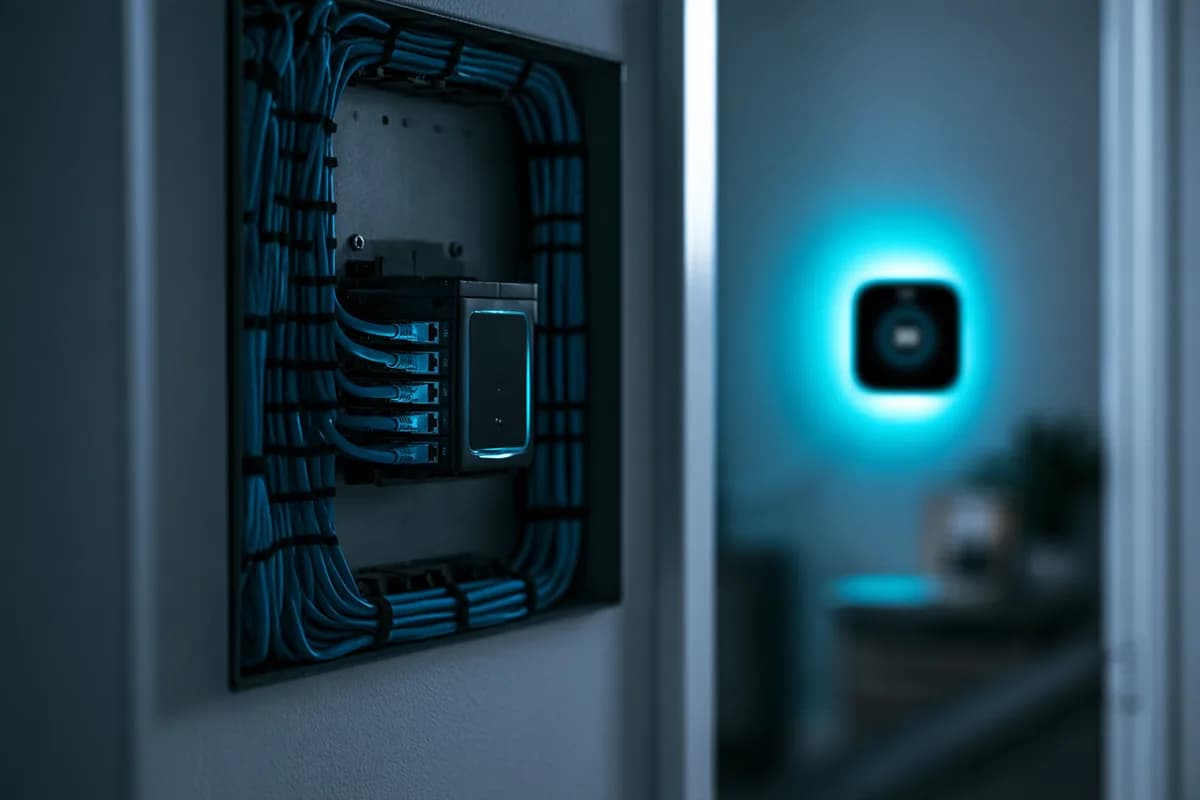
Every smart device in a home depends on the network underneath it, and a weak network is the reason most "smart home doesn't work" service calls happen. We treat Wi-Fi as infrastructure, not an afterthought: Cat6 home runs from a central distribution panel to each access point location, access point placement based on a coverage plan for the home's actual layout and construction materials rather than a guess, and a dedicated IoT VLAN or SSID where the platform supports segmenting smart devices from the homeowner's or resident's personal network traffic.
A mesh Wi-Fi kit dropped in without wired backhaul will work for a few devices in one room and fail intermittently everywhere else, which is exactly the pattern that generates callback tickets. Wired access points fed by a proper Cat6 backbone hold up under the device count a real smart home carries — locks, cameras, sensors, thermostats, hubs and streaming devices all reporting at once — and that is the standard we install to.
Builders and New Construction
For builders, we pre-wire at rough-in, before insulation and drywall close up the walls, on the builder's construction schedule rather than a homeowner's calendar. Rough-in is when Cat6 home runs, low-voltage backboxes and conduit for future device locations go in cheaply; retrofitting the same runs after drywall is several times the cost and tears into finished walls.
We build a standard package per floor plan, so every home in a phase gets the identical wiring layout, backbox placement and device count regardless of which crew ran that unit. That consistency is what lets a superintendent walk one model home and sign off on the standard for the whole phase instead of inspecting every house individually. Trim-out and device activation happen at finish, matched to the builder's punch list and closing schedule, with a walk-through alongside the superintendent before the home turns over.
Multifamily and Property Managers
Multifamily work runs on the same logic at a larger scale: a standard per-unit package — typically a smart lock, a thermostat, a hub and a set of leak sensors — installed identically across every unit in a community, so the property manager gets one system to support instead of a different combination in every building. Common-area access points and amenity center tie-ins are scoped alongside the unit packages so the whole property, not just individual apartments, is covered.
Turnover is where multifamily smart home programs live or die. Credentials, lock codes and device pairings have to be reset cleanly between residents without a technician re-running the whole install, so we hand off configured for the property management platform's own turnover workflow rather than leaving that process for the PM's staff to improvise. The goal is a system the property team can operate on their own after we leave, not one that needs us back for every move-out.
Short-Term Rentals
Short-term rental operators get a narrower but higher-stakes device mix: smart locks that issue a fresh code per guest and per booking, noise and occupancy-aware sensors alongside leak sensors that catch problems while a unit sits empty between guests, and thermostats the operator can set back remotely when nobody is booked. We schedule installs between bookings so a unit is never pulled from inventory mid-reservation, and we coordinate around cleaning windows so the crew and the install do not collide.
The economics of a short-term rental portfolio depend on minimizing dead nights and avoiding a guest locked out at midnight because a code did not sync, so we verify every lock and every code path before we leave a property rather than assuming the platform's pairing status is correct.
Commissioning and Handoff
A device is not done when it is mounted; it is done when it is paired, tested and confirmed reporting correctly in the owner's app or account. We test each lock's code entry, each sensor's trigger, each camera's live feed and each thermostat's schedule before signing off, and we label the low-voltage panel so the next person working on the home — an electrician, another technician, the resident themselves — can see what runs where.
For every unit we generate a completion record: unit or address, device list with serial numbers, install date and technician. On a multifamily or builder job that record rolls up into a per-phase or per-property package the client can hand to their own systems team. Handoff to the resident or the property manager includes a walkthrough of the app, not just a folder of paperwork.
How Much Does Smart Home Installation Cost?
Smart home installation labor typically runs $1,500 to $4,500 for a new single-family home pre-wire, $250 to $700 per unit for a standard smart package in a multifamily community, and $300 to $900 for whole-home Wi-Fi setup. These are typical 2026 labor ranges; devices and hardware are priced separately.
Low-voltage pre-wire for a new single-family home typically costs $1,500 to $4,500 in labor. The range covers Cat6 home runs to a central structured media panel, access point and camera drops, and wiring for locks, doorbells and thermostats, installed at rough-in before insulation and drywall. Larger floor plans and higher drop counts sit at the top of the range.
A per-unit smart package in a multifamily community — typically a smart lock, a thermostat, a hub and leak sensors — typically costs $250 to $700 per unit in installation labor at volume. The per-unit rate falls as the unit count at one site rises, because mobilization is the fixed cost.
Whole-home Wi-Fi setup — access point placement and configuration — typically costs $300 to $900. Wired backhaul runs through finished walls are quoted separately, because the labor depends on wall access, attic or crawlspace routes and finishes.
Individual device installation typically costs $100 to $250 in labor per device for a smart lock, video doorbell or smart thermostat, when wiring is already in place. Replacing a non-smart deadbolt, adding a doorbell transformer or running new thermostat wire adds to that.
Four factors move the price: device count and mix, new construction versus retrofit (open walls are cheaper than finished ones), volume at a single site, and travel. Exact pricing comes from an itemized quote built from your floor plans or unit list, device list and schedule — send those and we return line-item pricing rather than a range.
Individual Homes Welcome
Pre-wire at rough-in is the core of our builder program, alongside multifamily rollouts, and that scale is where we are set up to run fastest. We also install for individual homeowners who want the same wiring standard — a properly planned network, clean panel work and devices that are actually tested before we leave — without needing a hundred-unit program to get it.
Why Choose LVForce?
Most contractors check a few boxes. We check all of them.
Coverage
All 50 states, one contractor
1 city or region only
Coordination
Single point of contact, full scope
3-5 separate vendors to manage
Cable Testing
100% Fluke certified testing
Visual inspection only
Response Time
Under 24 hours guaranteed
3-5 business days average
Warranty
Full workmanship guarantee
Limited or none
Compliance
BICSI certified, fully insured
Varies by contractor
Frequently asked questions
Ready to build your network?
Get a free consultation and estimate for your project. Our team responds within 24 hours.