

Geotab Installation
Independent nationwide Geotab installation: GO devices, harness installs and IOX expansion accessories fitted and verified online.
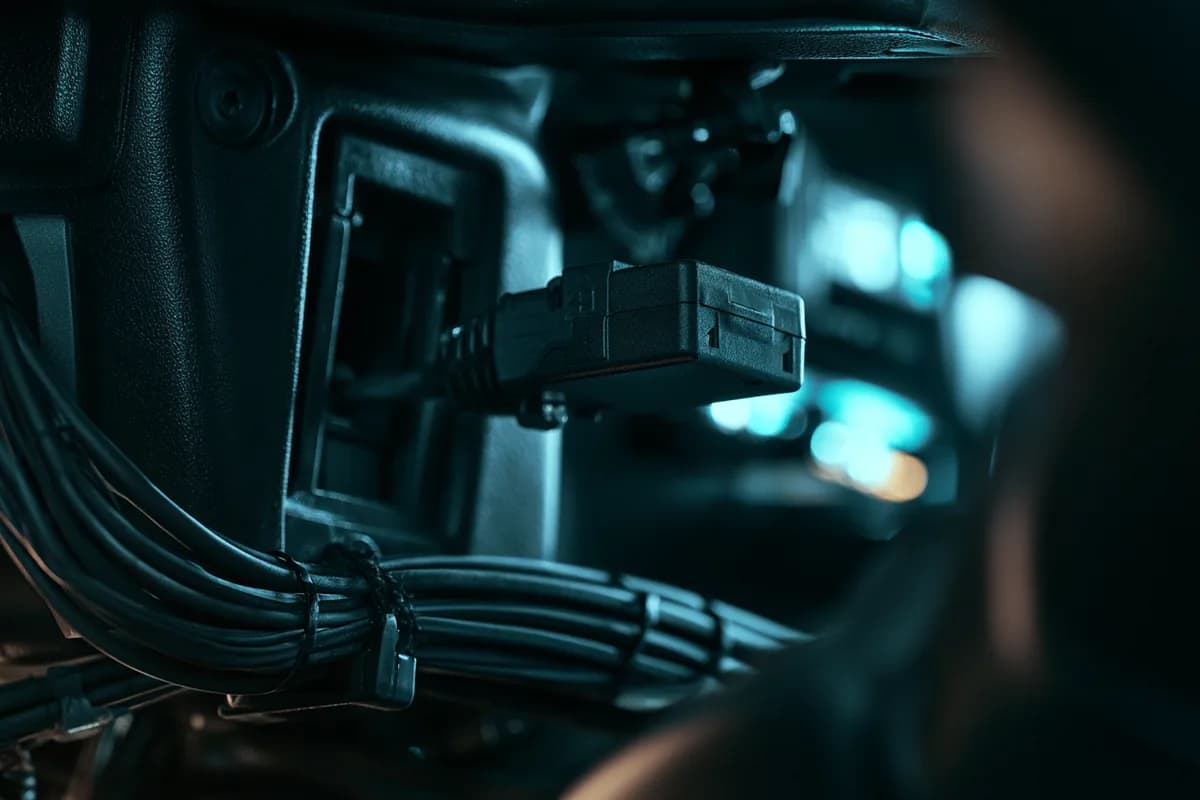
LVForce installs Geotab hardware for commercial fleets in all 50 states: GO telematics devices, harness-based installs, IOX expansion accessories and add-on cameras, fitted at your yards and confirmed reporting in your own Geotab account before the vehicle is released. We are an independent installation contractor with no vendor affiliation — we do not resell Geotab devices or subscription plans. Our job is the physical install and the proof that it works.
Geotab fleets are often the most mixed fleets we see: a few hundred light-duty units on OBD-II connections, a tractor fleet on nine-pin harnesses, and a pile of trailers and equipment on asset trackers, sometimes across dozens of terminals. That mix is exactly where a disciplined national installer earns its keep.
Independent Geotab Installation, Nationwide
LVForce installs Geotab hardware for commercial fleets in all 50 states: GO telematics devices, harness-based installs, IOX expansion accessories and add-on cameras, fitted at your yards and confirmed reporting in your own Geotab account before the vehicle is released. We are an independent installation contractor with no vendor affiliation — we do not resell Geotab devices or subscription plans. Our job is the physical install and the proof that it works.
Geotab fleets are often the most mixed fleets we see: a few hundred light-duty units on OBD-II connections, a tractor fleet on nine-pin harnesses, and a pile of trailers and equipment on asset trackers, sometimes across dozens of terminals. That mix is exactly where a disciplined national installer earns its keep.
GO Device Installs: OBD Port Versus Harness
Most Geotab installs come down to one decision per vehicle: plug into the diagnostic port, or install a harness. On light-duty vehicles with a healthy, accessible OBD-II port, a direct connection is the fastest and cleanest option and takes minutes. On medium- and heavy-duty vehicles we typically use a nine-pin or six-pin J1939 harness, and on vehicles where the port is occupied by another device, physically inaccessible, or prone to being kicked loose by the driver, we install a hardwired or extension harness instead.
We secure every connection so it cannot be casually unplugged or accidentally dislodged: the device is mounted, not left dangling, cable is routed behind trim and away from pedals and steering shafts, and the run is loomed where it crosses metal edges. Where a fleet wants the device out of easy reach for tamper reasons, we relocate it with a proper extension harness rather than an improvised splice.
IOX Expansion Accessories
IOX expansion accessories extend what a GO device can see, and they are where most of the real wiring work happens. Common add-ons include auxiliary input modules for PTO, door, lift-gate, spreader and beacon status, driver identification readers, hours-of-service and driver-facing displays, third-party camera integrations, and connectors for external sensors.
Auxiliary inputs are only as good as the signal they are wired to. We identify a real, switched source for each input — not a convenient nearby wire — fuse the connection, verify the input toggles correctly in the platform, and label the harness so the next technician knows which lead is which. That discipline is why a properly installed fleet can distinguish an idling truck from a truck running a PTO, and why a badly installed one cannot.
Cameras and Add-On Hardware
Fleets running Geotab commonly add video through integrated camera products or third-party partners connected through the device ecosystem. We install road-facing and dual-facing cameras with the same standard we apply on any telematics program: mounted high and centered behind the mirror in line with FMCSA's windshield-obstruction rule in 49 CFR 393.60, cable concealed behind headliner and A-pillar trim, clear of airbag deployment paths.
Because camera add-ons vary by fleet, we work from your hardware list and the installation documentation that ships with the specific product, rather than assuming one mounting method fits everything. If a camera and the GO device need to share a power source or a data connection, that gets planned before the first truck is on the lift, not improvised in the third vehicle.
Fleet Mix Guidance
The right install method depends on the vehicle, and getting it wrong is the leading cause of offline devices. Light-duty vans, pickups and sedans normally use a direct port connection. Class 5 through Class 8 vehicles typically use a J1939 harness so engine data is available. Older equipment and vehicles without a usable data bus can still be tracked using a hardwired power-and-ground install, accepting reduced engine telemetry.
Unpowered trailers, containers, generators and yellow iron need battery- or solar-powered asset trackers instead, mounted for sky view and physical survival rather than convenience. We walk your VIN list before mobilization and flag which vehicles fall into which category, so you order the right hardware once instead of discovering on install day that forty trucks need a harness nobody bought.
Nationwide Rollouts and Scheduling
For multi-terminal fleets we run Geotab deployments as a managed program: one project manager, per-terminal waves with firm dates and vehicle lists, local crews in each market, and completion tracking by VIN so you always know what is finished and what is outstanding.
Scheduling is built around your operation, not ours. We run nights, weekends, early-morning waves before drivers pull out, and rolling daily batches of five to ten units so the yard is never parked. A two-technician crew typically completes 8 to 14 vehicles per day at one location, and most single-terminal fleets under 50 vehicles are finished in a weekend.
Verification, Documentation and Sign-Off
A vehicle is complete only when the device is confirmed online in your Geotab account, associated with the correct VIN or asset name, and reporting live data — GPS position, ignition state, engine data where the vehicle supports it, and any auxiliary inputs toggling as expected. We test each input rather than assuming a wire is correct.
Every completed unit is documented with VIN, device serial, install type (port, harness or hardwired), accessories installed, date and technician. That record is what lets your fleet team reconcile a 300-vehicle rollout against the roster, close out the billing on unassigned devices, and hand a clean asset list to whoever inherits the program next year.
What Drives Installation Pricing
Geotab installation is priced per vehicle. The four things that move the number are install method (a port connection is far quicker than a hardwired harness with three auxiliary inputs), vehicle class and cab access, the number of vehicles staged at a single location, and travel to remote or low-count yards.
Because mobilization is the fixed cost, volume at one site drives the per-unit rate down sharply: thirty vehicles at one terminal costs much less per unit than six vehicles at five sites. Multi-site programs are quoted as a program with a blended per-vehicle rate and a defined wave schedule. LVForce is licensed and insured nationwide, with certificates of insurance provided on request before mobilization.
Why Choose LVForce?
Most contractors check a few boxes. We check all of them.
Coverage
All 50 states, one contractor
1 city or region only
Coordination
Single point of contact, full scope
3-5 separate vendors to manage
Cable Testing
100% Fluke certified testing
Visual inspection only
Response Time
Under 24 hours guaranteed
3-5 business days average
Warranty
Full workmanship guarantee
Limited or none
Compliance
BICSI certified, fully insured
Varies by contractor
Frequently asked questions
Ready to build your network?
Get a free consultation and estimate for your project. Our team responds within 24 hours.