
Samsara Installation
Independent nationwide Samsara installation: vehicle gateways, AI dash cams, asset trackers and sensors installed and verified online.
LVForce installs Samsara hardware for commercial fleets in all 50 states: vehicle gateways, AI dash cams, asset trackers and site sensors, mounted and wired at your yards and verified online in your own Samsara dashboard before we release the vehicle. We are an independent installation contractor with no vendor affiliation — we do not resell Samsara hardware or subscriptions, and we are not the vendor. You buy the platform; we do the physical work correctly.
Fleets hire an independent Samsara installer for the same reasons they hire any specialist trade: coverage, consistency and accountability. One crew standard across every terminal, one project manager for a national rollout, and a company that answers the phone when a device in Tulsa goes dark eight months after install.
Independent Samsara Installation, Nationwide
LVForce installs Samsara hardware for commercial fleets in all 50 states: vehicle gateways, AI dash cams, asset trackers and site sensors, mounted and wired at your yards and verified online in your own Samsara dashboard before we release the vehicle. We are an independent installation contractor with no vendor affiliation — we do not resell Samsara hardware or subscriptions, and we are not the vendor. You buy the platform; we do the physical work correctly.
Fleets hire an independent Samsara installer for the same reasons they hire any specialist trade: coverage, consistency and accountability. One crew standard across every terminal, one project manager for a national rollout, and a company that answers the phone when a device in Tulsa goes dark eight months after install.
Samsara Hardware We Install
We install the full range of Samsara hardware families a commercial fleet deploys: vehicle gateways for GPS, engine diagnostics and hours-of-service, AI dash cams in road-facing and dual-facing configurations plus add-on cameras for side and cargo views, battery- and solar-powered asset gateways for trailers and unpowered equipment, and environmental and site sensors for temperature, humidity, door status and power monitoring.
We work from your order — the hardware families and quantities you purchased — and stage against serial numbers, rather than proposing model numbers we have no business specifying. If your account team recommended a particular gateway or camera configuration, that is what gets installed, and we will flag it up front if a vehicle's wiring cannot support what was ordered.
Cab Installation Details
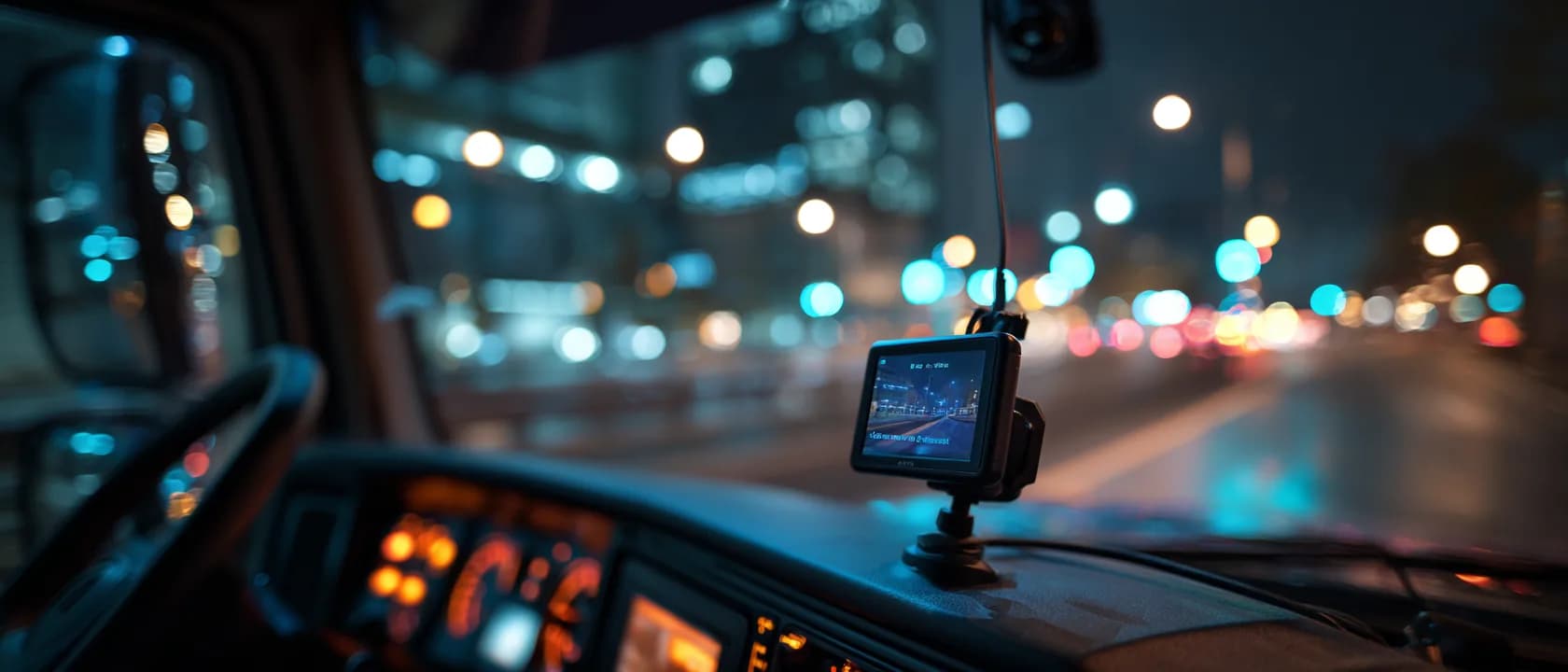
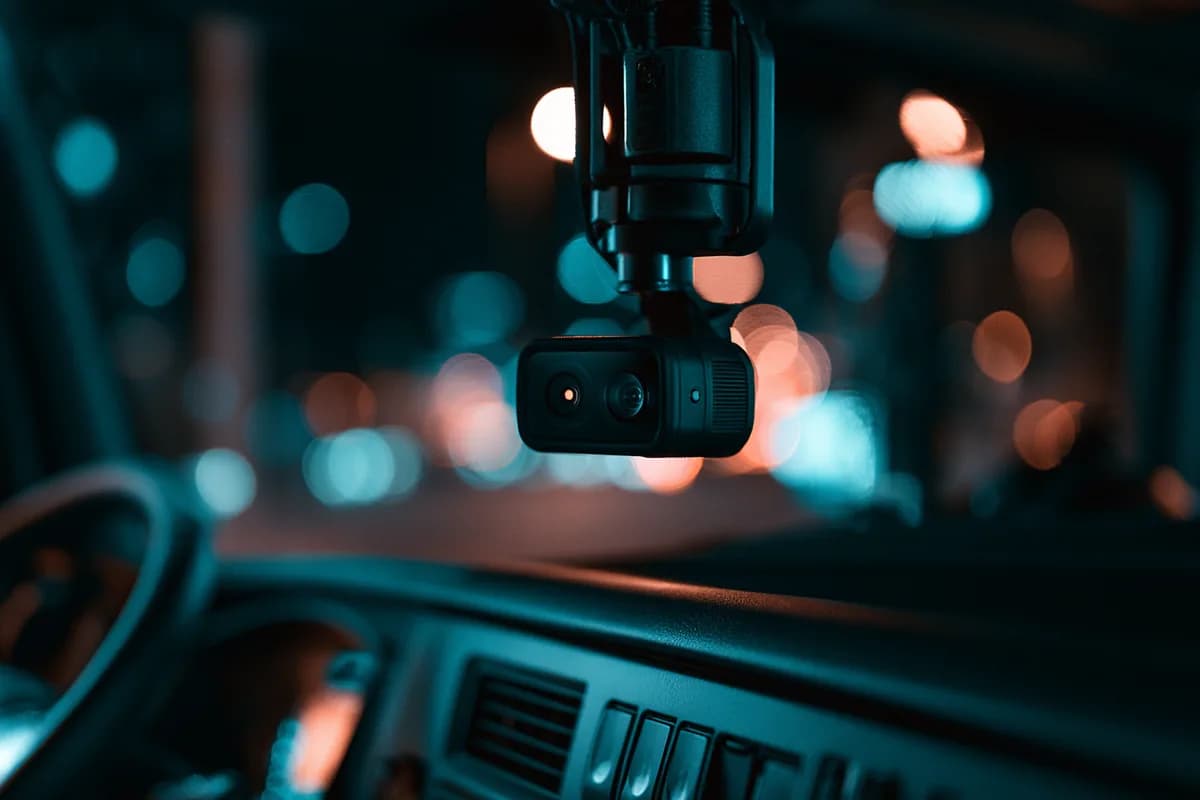
A cab install has three parts: the gateway connection, the camera mount and the cable path. The gateway connects through an OBD-II port on light-duty vehicles or a nine-pin J1939 connection on most Class 7 and Class 8 tractors; where a port is unavailable, occupied or unreliable, we land a fused hardwired connection at the fuse block instead of stacking adapters.
Camera placement follows FMCSA's windshield-obstruction rule in 49 CFR 393.60, which permits vehicle safety technology mounted not more than roughly 8.5 inches below the upper edge of the area swept by the windshield wipers, or 7 inches above its lower edge — inside the swept zone, near its top or bottom — and always outside the driver's sight lines to the road, signs and signals. In practice that means high and centered behind the mirror on most tractors. Cable is routed behind the headliner and A-pillar trim, secured clear of airbag deployment paths, with a service loop left at the device so a future swap does not require cutting the harness.
Trailers, Assets and Yellow Iron
Unpowered assets need a different approach than cabs, because there is no constant 12-volt source to rely on and no cab to hide a cable in. We mount battery- and solar-powered asset gateways where the unit gets clear sky view for GPS and cellular, survives a wash bay and a dock strike, and stays out of the path of forklifts, straps and dunnage.
Common placements include the trailer nose above the bulkhead, the upper rail near the landing gear, and protected mounting points on excavators, loaders, generators and light towers. Reefer trailers and cold-chain equipment can also carry temperature and door sensors, which we install and then validate by triggering a real reading — opening the door, or confirming a probe reports the actual box temperature — rather than assuming the sensor paired correctly.
Fleet Rollout Logistics
Multi-site Samsara rollouts run as a program, not a series of service calls. We start with a site survey or a remote survey call per terminal to confirm vehicle counts, vehicle mix, yard access, power and a staging area, then build a wave schedule so each terminal has a known date and a known vehicle list.
Driver communication is part of the plan. Fleets get the smoothest rollout when drivers know in advance which day their truck is being fitted, why the camera is going in, and that the unit will be handled by a professional crew rather than left half-installed. We provide the per-terminal schedule and completion tracking so your safety and operations leads can answer those questions without chasing us.
Verification Before Sign-Off
No vehicle is marked complete until the device is confirmed online in your Samsara dashboard, associated with the correct VIN or asset name, and reporting real data. Our technicians verify GPS lock, cellular connectivity, engine data where applicable, and camera framing against the seated driver's actual sight line — not a rough guess from outside the truck.
Where the configuration allows, we also generate a live test event before release: a short drive, a harsh-event trigger, or an input toggle that proves the data path from device to dashboard end to end. Each completed vehicle is documented with VIN, device serial, install date and technician, so your fleet manager can reconcile the rollout against the roster instead of discovering three unassigned devices at the end of a quarter.
Typical Timelines
Per-vehicle install time typically runs 45 to 90 minutes: about 30 to 45 minutes for a gateway plus a road-facing camera on a van or pickup, and 60 to 90 minutes for a tractor with a dual-facing camera, auxiliary inputs and concealed routing. Asset gateways on trailers and equipment usually take 20 to 40 minutes each.
At the program level, a two-technician crew typically completes 8 to 14 vehicles per day at a single yard. A 200-vehicle fleet spread across five terminals is normally finished within three to five weeks including scheduling and stragglers, and a single-terminal fleet of 40 units is usually done in a long weekend without touching a revenue day.
Existing Devices, Swaps and Migrations
Switching to Samsara from another platform, or replacing aging units, is a routine job for us. We remove legacy hardware and harnesses, correct any wiring shortcuts left behind by a previous installer, install and commission the new gateways and cameras, and package the old equipment for return so you are not billed for unreturned devices.
We also handle warranty swaps and one-off repairs after the rollout: a camera that took a windshield replacement, a gateway that went offline after a body shop visit, or a trailer tracker that disappeared with a wash bay incident. Because we install nationwide, that follow-up work does not depend on whether we happen to have a crew near you that month.
What Drives Installation Pricing
Samsara installation is quoted per vehicle, and four factors move the number: what is being installed (a gateway alone versus a gateway, dual-facing camera and auxiliary inputs), vehicle class and how difficult the cab is to route, how many vehicles are staged at one location, and travel to remote or low-count yards.
Volume at a single site is the biggest lever, because mobilization is the fixed cost — thirty trucks at one terminal is far cheaper per unit than six trucks at five sites. National programs are priced as a program with a blended per-vehicle rate and a defined wave schedule, so you get one predictable installation budget rather than a stream of unpredictable service invoices. LVForce is licensed and insured nationwide, with certificates of insurance provided on request.
Why Choose LVForce?
Most contractors check a few boxes. We check all of them.
Coverage
All 50 states, one contractor
1 city or region only
Coordination
Single point of contact, full scope
3-5 separate vendors to manage
Cable Testing
100% Fluke certified testing
Visual inspection only
Response Time
Under 24 hours guaranteed
3-5 business days average
Warranty
Full workmanship guarantee
Limited or none
Compliance
BICSI certified, fully insured
Varies by contractor
Frequently asked questions
Ready to build your network?
Get a free consultation and estimate for your project. Our team responds within 24 hours.