
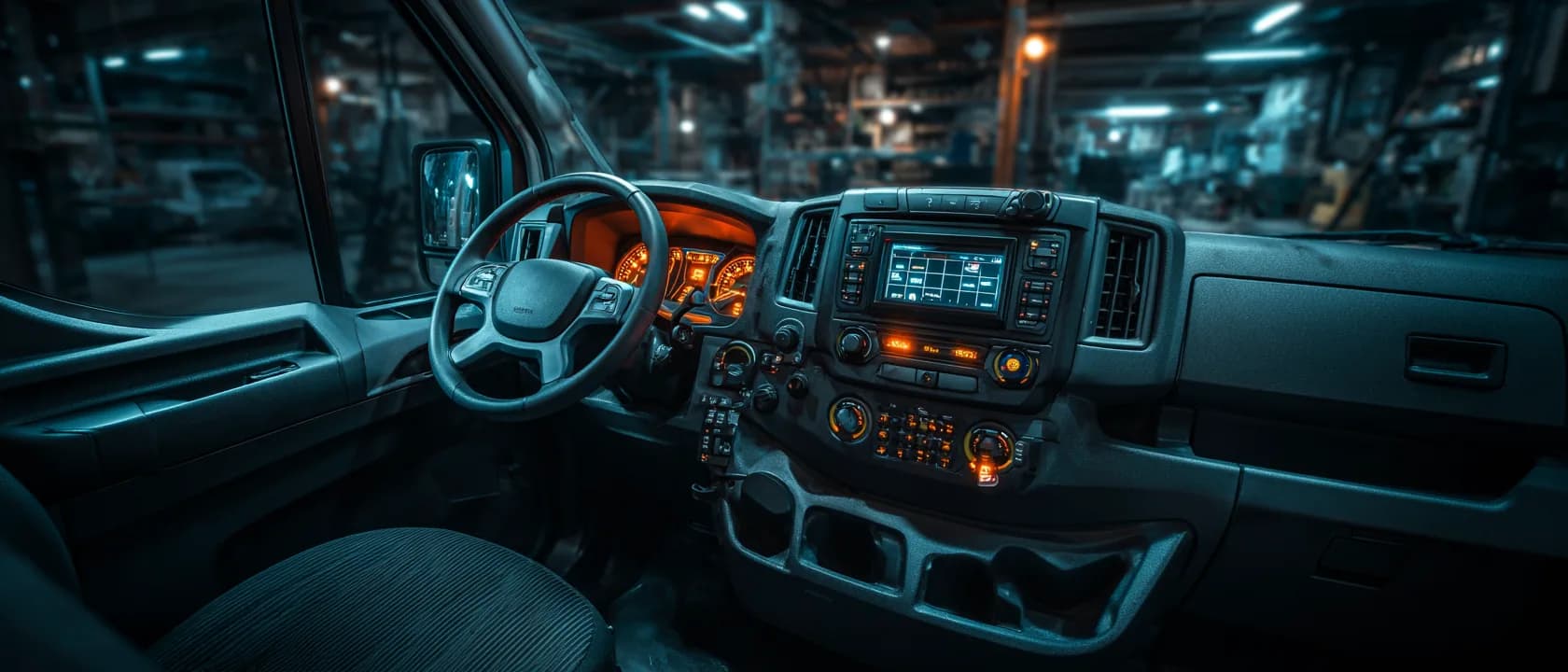
Verizon Connect Installation
Independent nationwide Verizon Connect installation: hardwired and OBD fleet trackers, camera add-ons and mixed-fleet rollouts.
LVForce installs Verizon Connect fleet tracking hardware in all 50 states: Reveal-class vehicle trackers in both hardwired and OBD configurations, camera add-ons and asset trackers, installed at your yards and confirmed reporting in your own account before the vehicle returns to service. We are an independent installation contractor with no vendor affiliation and we do not resell hardware or subscriptions.
Verizon Connect fleets tend to be service and trades fleets — plumbing, HVAC, electrical, pest control, landscaping, delivery — where vehicles are spread across metro areas and rarely sit in one yard at the same time. Installing those fleets is a scheduling problem as much as a wiring problem, and we plan for that from the start.
Independent Verizon Connect Installation, Nationwide
LVForce installs Verizon Connect fleet tracking hardware in all 50 states: Reveal-class vehicle trackers in both hardwired and OBD configurations, camera add-ons and asset trackers, installed at your yards and confirmed reporting in your own account before the vehicle returns to service. We are an independent installation contractor with no vendor affiliation and we do not resell hardware or subscriptions.
Verizon Connect fleets tend to be service and trades fleets — plumbing, HVAC, electrical, pest control, landscaping, delivery — where vehicles are spread across metro areas and rarely sit in one yard at the same time. Installing those fleets is a scheduling problem as much as a wiring problem, and we plan for that from the start.
Hardwired Versus OBD Tracker Installs
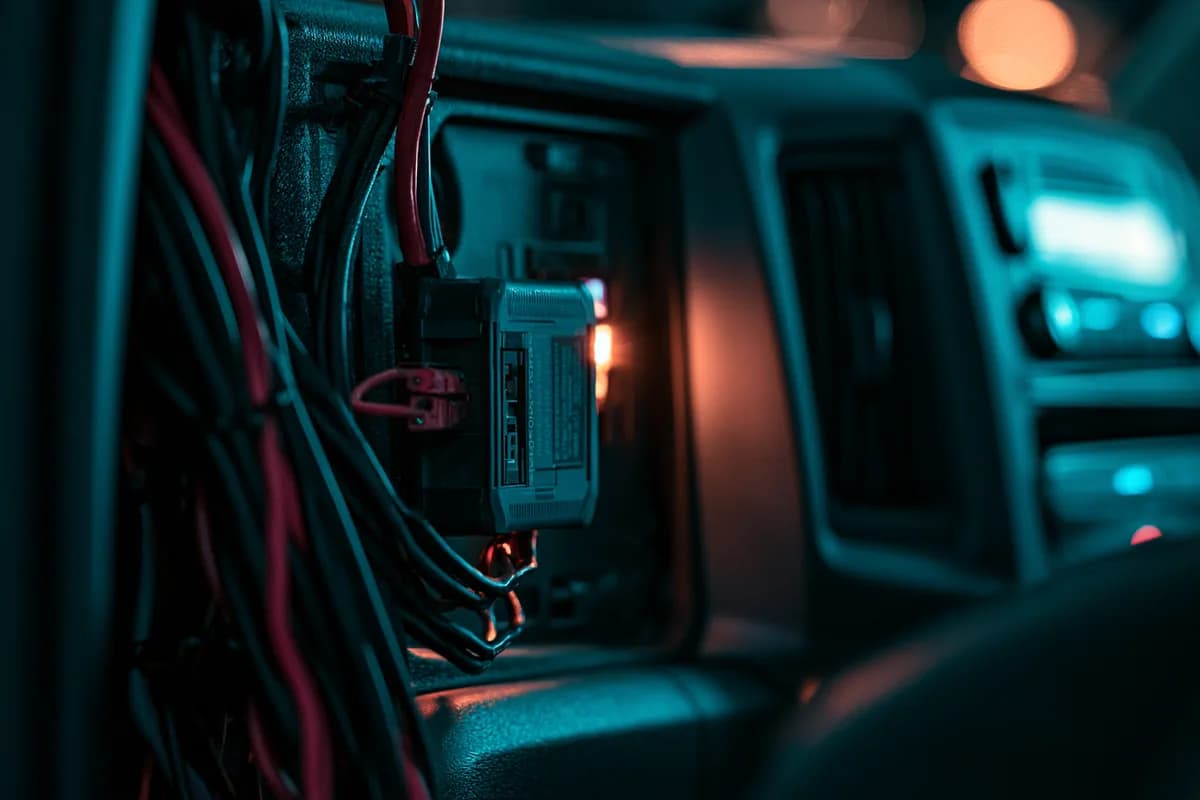
The install method is the first decision on every vehicle. An OBD-II plug-in tracker is fastest and requires no cutting, which suits leased vehicles and fleets that rotate units frequently. A hardwired install — ignition, constant power and ground landed at the fuse block — is the better choice when you want the device concealed, tamper-resistant, or on a vehicle whose diagnostic port is occupied, damaged or awkwardly placed under the driver's knee.
We recommend hardwiring for any fleet that has had trackers "mysteriously" go offline, because a plug-in device is trivially unplugged and just as trivially blamed on a bad unit. Hardwired installs are fused, loomed and mounted out of sight, with a service loop left so the device can be swapped later without cutting into the harness.
Vehicles and Assets We Cover
We install across the full service-fleet range: cargo vans, pickups, box trucks, stake beds, sedans and specialty bodies, plus medium- and heavy-duty units on nine-pin J1939 connections. For unpowered assets — trailers, generators, compressors, light towers, skid steers — we install battery- and solar-powered trackers mounted for clear sky view and physical survival.
Upfitted vehicles get particular attention. A plumbing van with a shelving package, a bulkhead and an inverter has very little accessible dash space and a lot of aftermarket wiring already in it. We route around existing upfits rather than through them, and we do not tap an unknown aftermarket circuit because it happens to be convenient.
Camera Add-Ons
Many fleets pair tracking with integrated dash cameras, in road-facing or dual-facing configurations. We mount cameras high and centered behind the mirror in line with FMCSA's windshield-obstruction rule in 49 CFR 393.60, run the cable behind the headliner and A-pillar trim clear of airbag deployment paths, and verify framing from the seated driver position on that specific vehicle.
Where a camera and tracker share power, we plan the circuit before the first vehicle goes on the lift: correct fusing for the combined load, a single clean landing point at the fuse block, and labeled leads so the next technician is not reverse-engineering someone else's work. Cameras are then confirmed streaming or uploading in the platform before the vehicle is released.
Mixed Fleets and Multi-Platform Reality
Service companies grow by acquisition, and acquired fleets arrive with their own telematics contracts. It is normal for us to walk into a fleet running Verizon Connect in one division, another platform in a second, and nothing at all in a recently bought company. We install all of them, which means one installation vendor, one schedule, one workmanship standard and one completion report instead of three vendor rollouts colliding in the same yard.
The same applies to migrations. When you consolidate onto one platform, we remove the legacy hardware and harnesses, clean up whatever wiring shortcuts were left behind, install and commission the new devices, and package the old units for return so you are not billed for unreturned equipment.
Scheduling a Fleet That Never Sits Still
Service fleets rarely park together, so we schedule around the way they actually operate: early-morning waves before trucks roll out, evening and weekend blocks, installs during scheduled maintenance visits, and rolling daily batches so a branch loses one or two vehicles at a time instead of a whole day of capacity.
For fleets scattered across a metro, we can work at multiple branch locations in sequence or at a customer-designated central point on a set date. Per-vehicle install time typically runs 30 to 75 minutes: about 20 to 30 minutes for a plug-in tracker, 45 to 75 minutes for a hardwired install with a camera and concealed routing. A two-technician crew commonly completes 10 to 16 service vehicles in a day.
Verification Before the Vehicle Goes Back Out
No vehicle is released until the tracker is online in your account under the correct vehicle name or VIN, GPS lock and cellular connectivity are confirmed, ignition state reports correctly, and any camera add-on shows a usable image with correct framing. Where the configuration supports it we generate a live test event so the data path is proven from device to dashboard, not assumed.
Each vehicle is documented with VIN or unit number, device serial, install type, accessories, date and technician. On a 200-vehicle service fleet spread over a dozen branches, that record is the only practical way to reconcile what is installed against what you are being billed for.
What Drives Installation Pricing
Verizon Connect installation is quoted per vehicle. The rate depends on install method (plug-in versus hardwired), whether a camera and auxiliary wiring are included, vehicle type and how much upfit has to be worked around, how many vehicles are available at one location, and travel between branches.
Volume at a single site is the biggest cost lever, since mobilization is the fixed expense. Fleets that can stage 15 or more vehicles at one branch on one day see a materially lower per-unit rate than fleets that release three at a time across five locations. Multi-branch programs are quoted as a program with a blended per-vehicle rate and a defined schedule. LVForce is licensed and insured nationwide, with certificates of insurance provided on request.
Why Choose LVForce?
Most contractors check a few boxes. We check all of them.
Coverage
All 50 states, one contractor
1 city or region only
Coordination
Single point of contact, full scope
3-5 separate vendors to manage
Cable Testing
100% Fluke certified testing
Visual inspection only
Response Time
Under 24 hours guaranteed
3-5 business days average
Warranty
Full workmanship guarantee
Limited or none
Compliance
BICSI certified, fully insured
Varies by contractor
Frequently asked questions
Ready to build your network?
Get a free consultation and estimate for your project. Our team responds within 24 hours.